
From the world of The Adventures of Gabriel
From the world of The Adventures of Gabriel
EXCLUSIVE TO CORAL COVE CLUB MEMBERS
You've met the crew. Now discover what they've been hiding.
Behind every character in The Adventures of Gabriel lies another story. Some are full of courage. Others are wrapped in mystery. And a few are so secret they haven't been unlocked yet.
Inside The Secret Files, Coral Cove Club members can explore deeper character stories, uncover hidden connections, investigate the mysteries of Gabriel's treasured possessions, and discover classified files waiting to be revealed.
The Crew's Untold Stories
Get closer to Gabriel, Platy, Jack and the characters you thought you knew.
Coral Cove's Hidden Legends
Discover mysteries, unlikely friendships and secrets from across the adventures.
The Satchel Files
Explore the deeper significance of the extraordinary treasures Gabriel carries.
Classified Files
Discover mysterious dossiers, some of which remain locked for future revelations.
Your Turn, Truth-Seeker!
Use the characters and mysteries to inspire an adventure of your own.
Some secrets are only shared with the crew.
Think it. Do it. Did it.
Every week, your child decides what happens next in Coral Cove.
Every week, your child decideswhat happens next in Coral Cove.
In the Coral Cove Adventure, we create a new story together with Platy and the crew from The Adventures of Gabriel, shaped by the children's ideas.Every month, the finished stories arrive through your letterbox in Platy Press. And when they're ready, the Create Your Own Story workshop helps them write their own.
In the Coral Cove Adventure, we create a new story together with Platy and the crew from The Adventures of Gabriel, shaped by the children's ideas.Every month, the finished stories arrive through your letterbox in Platy Press. And when they're ready, the Create Your Own Story workshop helps them write their own.
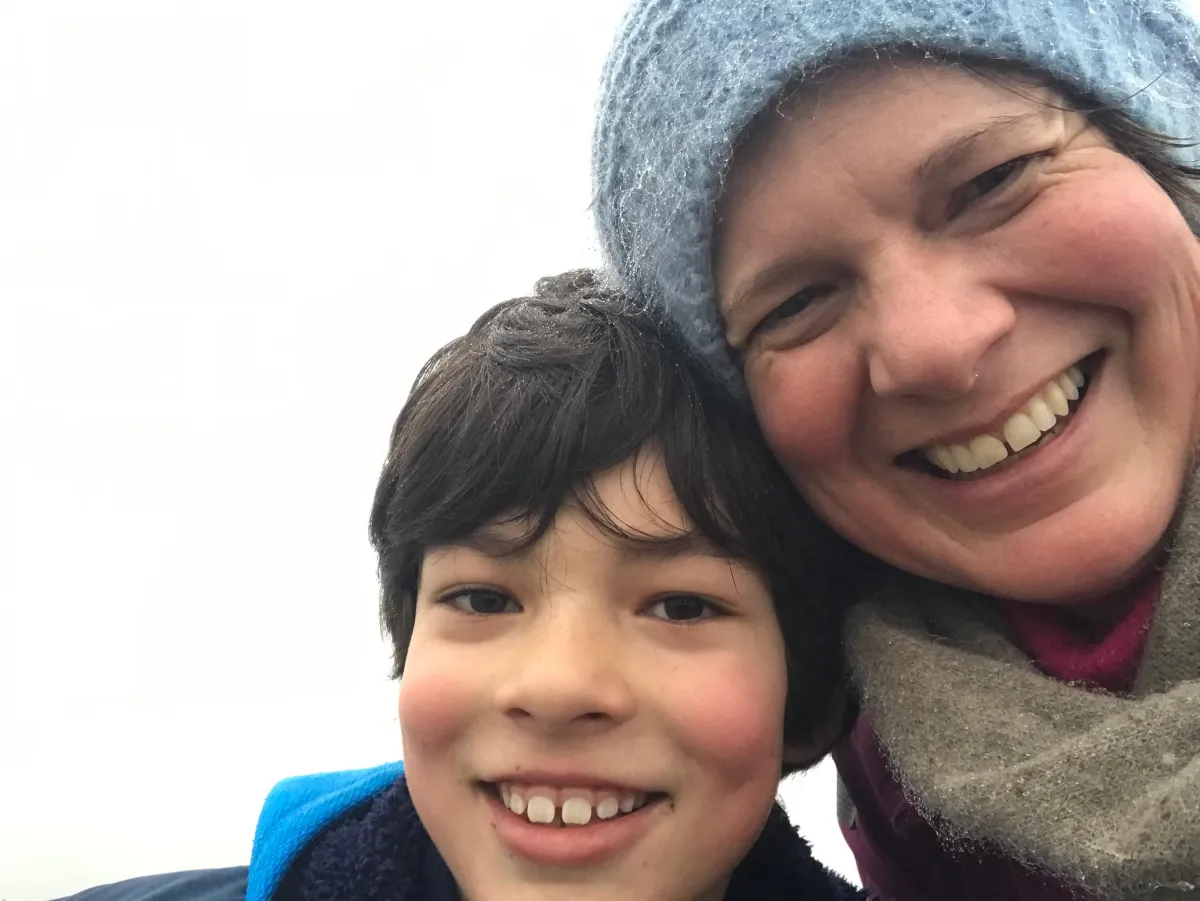
Your child is a natural storyteller
Your child is a natural storyteller
You hear them in the car.
You hear them halfway through tea.
And you hear them in the middle of the film you're all watching, when the monster gets a new name and an extra head.
Then a writing task comes along and it all goes quiet. The page stays blank.
It isn't that they can't write.
Writing asks them to think of the idea, hold on to it, spell it, form the letters and punctuate it, all at once.
The story is the first thing to go.
Which is why the Coral Cove Club has one aim. And it's incredibly simple.
To give your child the freedom to express themselves, and the confidence that what they imagine is worth saying.
Story is simply the tool we use.
Your child is the hero…
In their own words…
With their own rules.
And it starts in Coral Cove.
The Coral Cove Adventure: where we create together
Writing a whole story can feel like a big thing to start.
Writing a whole story can feel like a big thing to start.
So every week, we build a short story together in the world Gabriel created. We call it the Coral Cove Adventure.
Monday: this week's Adventure begins
Platy, Jack the Cat, Captain Ali and the rest of the characters from The Adventures of Gabriel. I tell you who is in the story that week and set the scene.
Then the fun begins, because your child decides what happens next.
Where should the adventure take place?
Where should the adventure take place?
What challenges will the heroes face?
The Story Gallery
What monsters do they have to defeat?
You send in their ideas. They can also send a riddle, or a puzzle of what they think would enhance the story.
Thursday: voting closes. Send in your child's ideas by 9am (UK time) on Thursday.
Friday: the Adventure comes back.
You send in their ideas. They can also send a riddle, or a puzzle of what they think would enhance the story.
Thursday: voting closes. Send in your child's ideas by 9am (UK time) on Thursday.
Friday: the Adventure comes back.
Friday: the Adventure comes back.
Writing a whole story can feel like a big thing to start.
Once I have all the ideas for monsters, challenges and places, I write the story and read it to you.
I add a puzzle or riddle, and name the ideas that made it in, by nickname and with your permission.
Then families get to vote on the pictures for this week's story.
Each week, I'll share a selection of illustrations inspired by the children's ideas. You'll be able to vote for your favourites and help decide which pictures feature in this week's edition of Platy Press.
It's another lovely way for you and your child to be part of the creative process, watching their ideas grow from a simple suggestion into a story filled with characters, adventures and illustrations.
So the idea your child dreamt up on Monday could be part of the story by Friday!
So the idea your child dreamt up on Monday, could be in the story by Friday.
Everything is pre-recorded, so your child is never on screen and everything goes through you.
The shows are there to inspire you, and to show how we build a story from the ideas we collect. Which is exactly how all of the Adventures of Gabriel began.
You can rewatch them any time, maybe as part of your own story hour.
Voting closes on Thursday, and the story is published on Friday with the picture vote.
Once a month, the stories arrive through your door
At the end of the month, the stories we've created together go into the next edition of Platy Press.
We seal it in an envelope, and it drops through your letterbox a few days later.
Platy Press is printed and posted. Inside:
The month's stories the children helped create
A message from me, for you
A message from Gabriel, for the children, about what he's been up to and what story he's working on.
Platy Press itself needs no login, no screen and no charger. Just your letterbox.
Then they write their own
Once your child has helped shape Gabriel's world, they're ready to build their own. That's what the Create Your Own Story workshop is for.
I created it after Gabriel and I wrote the first Adventures of Gabriel book, so I could take what we'd done into schools.
Everything is geared towards taking all those wonderful stories they tell you over the dinner table and putting them on paper.
They create their characters…
Map out their adventures…
And, of course, create the monsters they'll battle, challenges they face or problems they solve.
Everything you need is there, and you can go at your own pace.
But the real magic is that you do it together, one hour a week.
It's the same kind of time as baking cakes or playing football in the back garden.
This is about having fun, and the kind of moments you imagined when you thought about what being a parent would be like.
Which is why we flip roles
Your son or daughter is in charge, and YOU take instructions.
You don't need to be creative.
You don't need to correct anything.
And no idea is too wacky.
If they want their companion to be a marshmallow (and one of the children in the schools did), they can be a marshmallow.
Your child tells the story. Capture it. Spelling can be fixed later after you have uplevelled it together and are ready for the final edit.
The Campfire: part of something bigger
It's always fun to share your ideas, which is why we created the Campfire, our community for parents and grandparents.
Families can send in their children's ideas and share where their adventures have taken them.
Little by little, the world gets bigger as the children shape it.
The Campfire is also where you can post any question.
How it began
I stumbled on this idea with Gabriel.
When all we had was one hour a week on a FaceTime call, I wanted something to replace the games we used to play together.
Knowing how much Gabriel loves adventure stories, I asked him if he wanted to write a story where he was the hero.
He jumped at the chance.
And on Friday evenings, one hour at a time, we gradually built the world of Coral Cove.
I'd ask him questions like:
Where does the story take place?
Who are you going on your adventure with?
When I asked what the monster looked like, he told me about a two-headed sea monster, "half Kraken and half Leviathan", with glowing eyes.
When I asked who he was going with, he told me…
"Platy, of course."
Platy being the platypus cuddly toy he'd had forever.
Over the next 8 weeks, the world of Coral Cove took shape.
And that is how The Adventures of Gabriel began.
All 3 books are now Amazon bestsellers.
Seeing what we'd achieved inspired me to share it.
So I spoke to a friend who's a former head teacher, showed her the book and told her how we'd created it…
She thought it was an amazing idea.
I took it into 9 primary schools. 465 children took part, with 100% participation
Including the children who normally hated writing.
What the schools said
I'd seen first-hand how well the method worked with Gabriel. But one to one is different to a classroom.
When we ran the workshops in the schools, the teachers were blown away… as was I. Here's what they had to say:
Engaging reluctant boys in writing lessons has been a school focus; in our session pupils couldn't wait to get started.
Their approach ignited the children's imaginations and encouraged creative writing without limits.
This programme has had a genuinely transformative effect on our pupils' engagement with reading and writing.
So fun. I want to be an author when I grow up. I wish I could do this every day.
It felt like you could do anything and anywhere. You could even have a pet marshmallow!
I like writing my own story with no rules… I'm looking forward to finishing my story and to make more with only my rules! Not anybody else's.
And that last quote is perhaps the most important one.
Why it works
Children can think faster than they can write.
A friend's son, who has dyslexia, never wrote short of stories in class. He just couldn't get them onto the page, and the frustration came out as misbehaving. Once he could say his ideas instead of writing them, his stories were filled with killer bunny rabbits and aliens that looked like jam jars.
Like most children, he never had a problem with his imagination. His problem was getting the ideas onto the paper.
66%
Research with children in Grades 1–3 found that handwriting and spelling skills together explained 66% of the variation in writing fluency.
When handwriting and spelling require more attention, young writers have fewer mental resources available to develop their ideas.
When Children Are Free to Imagine, Their Stories Come to Life
When the writing takes all their attention, there's nothing left for the story. They worry so much about spelling and being told they're wrong that their ideas stall.
Then they start to believe they can't write stories.
They are wrong, and it is an easy mistake to make.
16% More
In a study of 76 six-year-olds, children produced an average of 16% more words when retelling stories aloud than when writing them down.
79%
Ideation and transcription skills together explained 79% of the variation in children's written story-retelling scores in the study's statistical model.
Findings from a study of 76 six-year-old children completing oral and written story-retelling tasks. Results do not establish the effectiveness of Coral Cove Club specifically.
That's why in the Club, your child tells the story and someone else writes it down.
I spent twenty years as a physiotherapist asking people open questions and never judging the answers.
Our only rule is that anything is possible. When it’s your own story, you can’t be wrong. Your grown-up is there to write it down, and to ask the questions that make a good idea even better.
Spelling, grammar and punctuation can wait until a child believes they are ready for the editorial process.
Why it matters
I'd seen first-hand how well the method worked with Gabriel. But one to one is different to a classroom.
When we ran the workshops in the schools, the teachers were blown away… as was I. Here's what they had to say:
What you get
The Coral Cove Adventure. One story every week. It starts on Monday and your child helps decide what happens next. On Friday the finished story comes back and it is time to vote on the pictures.
The Create Your Own Story workshop. For your child's own story, at your own pace.
Two emails a week. So you always know what's coming next.
Platy Press, every month. The month's stories, a message from me and a message from Gabriel, posted to your door.
The Campfire. For parents and grandparents. Share ideas and post your questions. I'm there to answer them.
A members' area. Every show and the workshop in one place, whenever you want them.
Who it is for
The Club is for children aged 7 to 12, and the parents and grandparents who want to spend time having fun with them.
It is not for families looking for measurable progress or a curriculum.
It is for families who believe a child who trusts their own imagination is already ahead.
More Than Another Activity Box
Plenty of subscriptions give your child something to do. Coral Cove gives you something to create together.
STEM & ACTIVITY KITS
KiwiCo
$24+
/ month
Hands-on science and creative projects delivered in activity boxes.
WHAT YOU GET
Guided projects and materials to build and explore.
DISCOVERY SUBSCRIPTION
Little Passports
$25+
/ month
Educational activity kits exploring science, places and new discoveries.
WHAT YOU GET
Themed activities and guided learning experiences.
COOKING SUBSCRIPTION
Raddish Kids
$28.95
/ month
Cooking kits with recipes, kitchen activities and culinary skills.
WHAT YOU GET
Recipe guides and cooking tools for shared kitchen time.
STORYTELLING MEMBERSHIP
Coral Cove Club
$29
/ month
Your child's imagination leads. You listen, ask questions and help bring their story to life.
WHAT YOU GET
JOIN THE CORAL COVE CLUB
- ✓ A new story to shape every week
- ✓ Printed Platy Press every month
- ✓ Workshop to create their own story
- ✓ Creative time together, led by your child
Prices shown in USD for comparison. Competitor pricing varies by plan and subscription term.
IN THEIR OWN WORDS
What People Say
From captivated audiences to inspired classrooms, hear how Kate’s storytelling encourages imagination, confidence and meaningful connection.
“Practical Steps You Can Use Straight Away”
“I found it fascinating how Kate took a familiar fairy tale and drew out practical steps you could implement straight away.”
— Rashmeet

“Powerful, Humorous and Touching”
“Kate wove a well-known story into a powerful message about expectations, mindsets and how we approach things.”
— PSA Attendee
Absolutely Magical”
“Kate’s use of imagery and metaphors was brilliant. The whole presentation was absolutely captivating.”
— Diana
They Didn’t Want to Leave”
“Even the children who do not usually enjoy writing wanted to stay. They wanted to keep creating and asked to do it again.”
Questions
What age is it for?
Children aged 7 to 12. Younger children can join in with a grown-up.
Does my child have to write?
Not to start with. In the Coral Cove Adventure, they decide what happens next and you send in their ideas. In the workshop, they tell the story and you write down every word, so spelling and handwriting never get in the way.
How much time does it take?
The Monday Adventure is about 15 minutes and the Friday story about 5. The workshop hour is whenever you choose. [CONFIRM LENGTHS]
Is my child ever on screen?
No. Everything is pre-recorded, and everything goes through you.
Do we need the books first?
No. The world of Coral Cove is introduced as you go.
I've already bought the Create Your Own Story workshop.
Your first month of the Club is free. [DECIDE]
What if we are outside the UK?
[POSTAGE: CHECK COST AND TIMINGS]
What if we miss an episode?
? Everything is pre-recorded and stays in your members' area.
What happens to my child's ideas?
You agree the terms when you join. Ideas are rewritten in my own words, and your child is only ever named by a nickname you choose. [LAWYER TO CONFIRM WORDING]
How do I cancel? [ONE-CLICK CANCEL: CONFIRM]
P.S. Gabriel is twelve now. He still tells me where the story goes next, and I still write it down. [GABRIEL TO OK]
This week's Adventure is waiting for your child to decide what happens next.
[ Join the Coral Cove Club, $29 a month, cancel anytime ]
The Adventures of Gabriel
The Coral Cove Club gives children the freedom to imagine, speak and be heard without being corrected, guided or rushed. It begins with a story. But what families create together is something much bigger: connection.

coNTACT dETAILS
+44 7360 270776


© Copyright 2026. The Adventures of Gabriel. All rights reserved.
Privacy Policy