
Kate & Gabriel’s Story
The Night Before
The night before Gabriel was taken, I read to him at bedtime.
Just before sleep, he asked, “Mum, do you have a nice bookmark?”
I told him I did.
“You made it for me when you were three.”
I have carried that bookmark in my pocket every single day since.
I did not know then that stories, bookmarks and books would become the purpose of our lives. I did not know that what happened next would reach children across four continents or that the thing Gabriel asked me about on his last night at home would become one of the things that held us together.
But it did.
Before StoryQuest Had a Name
Stories had always been how we found one another.
My grandfather was a storyteller from Bradford in the UK. He needed no book only his voice and my wide-eyed attention.
My mother read to my brother and me every night until the end of junior school. Even when we could read for ourselves, she kept the ritual. Stories were never something we simply consumed. They were something we experienced together.
When Gabriel came along, I continued what had been passed down to me.
We read everywhere. At bedtime. At home. On long journeys. In the car, Gabriel became our audiobook DJ, choosing which worlds we would enter next.
I did not call it a method. There was no programme, framework or plan.
It was simply the way our family stayed close.
Storytelling was not a strategy I invented. It was three generations deep.
I did not know then how much we were going to need it.
The Night Before
The night before Gabriel was taken, I read to him at bedtime.
Just before sleep, he asked, “Mum, do you have a nice bookmark?”
I told him I did.
“You made it for me when you were three.”
I have carried that bookmark in my pocket every single day since.
I did not know then that stories, bookmarks and books would become the purpose of our lives. I did not know that what happened next would reach children across four continents or that the thing Gabriel asked me about on his last night at home would become one of the things that held us together.
But it did.
The night before Gabriel was taken, I read to him at bedtime.
Just before sleep, he asked, “Mum, do you have a nice bookmark?”
I told him I did.
“You made it for me when you were three.”
I have carried that bookmark in my pocket every single day since.
I did not know then that stories, bookmarks and books would become the purpose of our lives. I did not know that what happened next would reach children across four continents or that the thing Gabriel asked me about on his last night at home would become one of the things that held us together.
But it did.
When All We Had Left Was a Voice
I am a former physiotherapist and a lifelong sportswoman.
For twenty years, I used clinical listening as a diagnostic tool. But movement had always been my natural language. Walking side by side. Kicking a ball. Swimming. Sharing the physical experiences that quietly build confidence and connection between a parent and child.
When the family court separated us, all of that disappeared.
You cannot kick a ball through a phone screen. You cannot walk beside one another, sit in the same room or reach for your child when they need you.
The one hour I had with Gabriel each week took place over FaceTime.
A screen. A voice. Sixty minutes.
Every familiar tool I had as a mother and as a clinician had been removed at the same time. I had to discover what a voice could do when a body could not be present.
The legal system had painted a picture of me that I did not recognise. I could not control that picture but I could protect the truth of the connection between my son and me.
So, one Friday evening, I asked Gabriel a question:
“Would you like to create a story where you are the hero?”
He said yes.
And with that one word, an entirely new world began.
When All We Had Left Was a Voice
I am a former physiotherapist and a lifelong sportswoman.
For twenty years, I used clinical listening as a diagnostic tool. But movement had always been my natural language. Walking side by side. Kicking a ball. Swimming. Sharing the physical experiences that quietly build confidence and connection between a parent and child.
When the family court separated us, all of that disappeared.
You cannot kick a ball through a phone screen. You cannot walk beside one another, sit in the same room or reach for your child when they need you.
The one hour I had with Gabriel each week took place over FaceTime.
A screen. A voice. Sixty minutes.
Every familiar tool I had as a mother and as a clinician had been removed at the same time. I had to discover what a voice could do when a body could not be present.
The legal system had painted a picture of me that I did not recognise. I could not control that picture but I could protect the truth of the connection between my son and me.
So, one Friday evening, I asked Gabriel a question:
“Would you like to create a story where you are the hero?”
He said yes.
And with that one word, an entirely new world began.
THE FRIDAY NIGHTS
Twenty-Four Months of Friday Evenings
Every Friday, Gabriel told the stories. I asked the questions and wrote down every word.
No corrections. No templates. No “That doesn’t make sense.” Only one invitation:
“Tell me more.”
First Came Platy
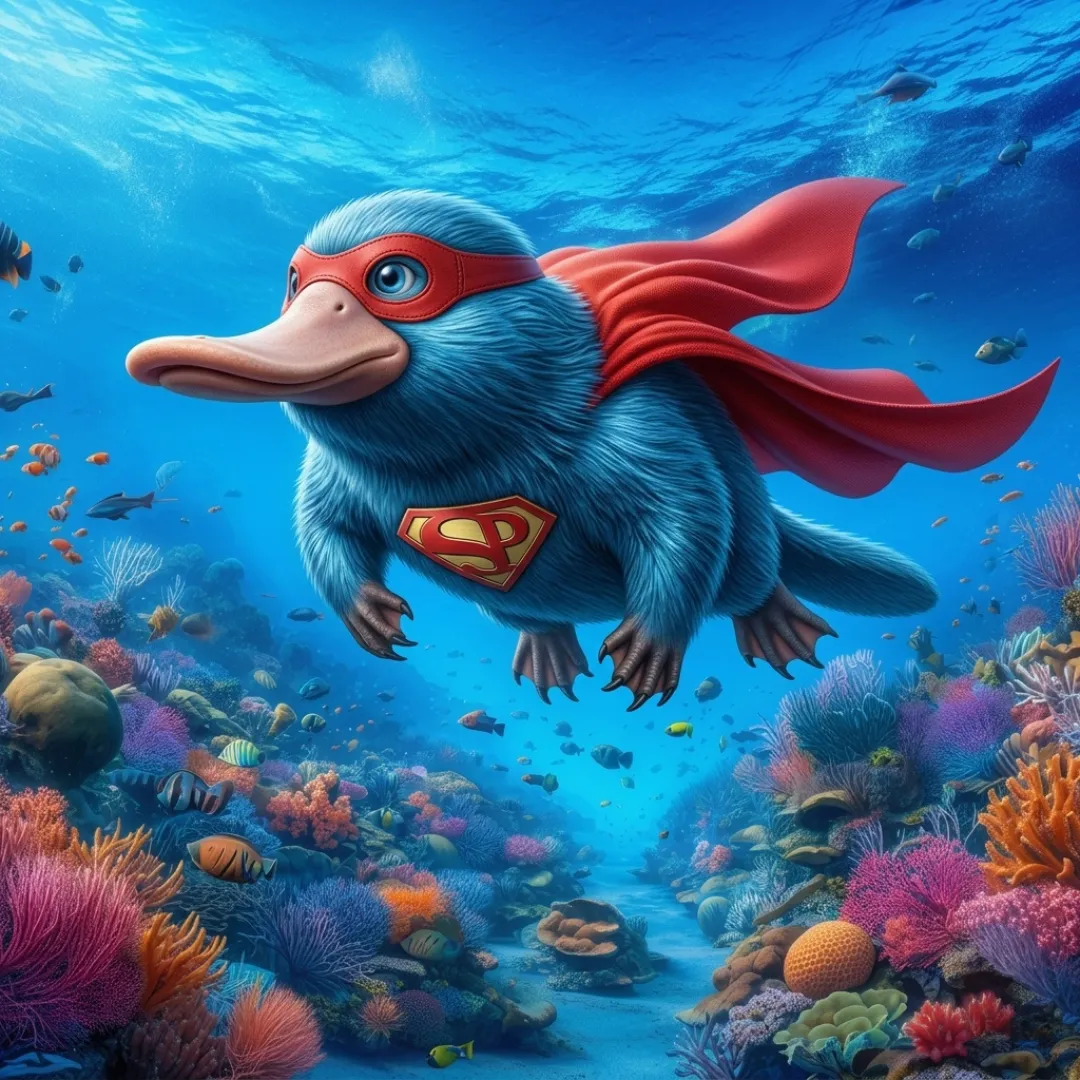
An electric platypus who had absolutely no respect for the idea that some things were impossible.

Then Came Coral Cove
An electric platypus who had absolutely no respect for the idea that some things were impossible.

And Then, Tentaculus
He invented the sea monster Tentaculus, and looked it directly in the eye rather than run.
Those Friday evenings were never simply about literacy. They gave Gabriel a world in which he could lead, decide and imagine without interruption.
Every idea was treated as real. Every word was worth recording. For one uninterrupted hour, nothing he created could be wrong.
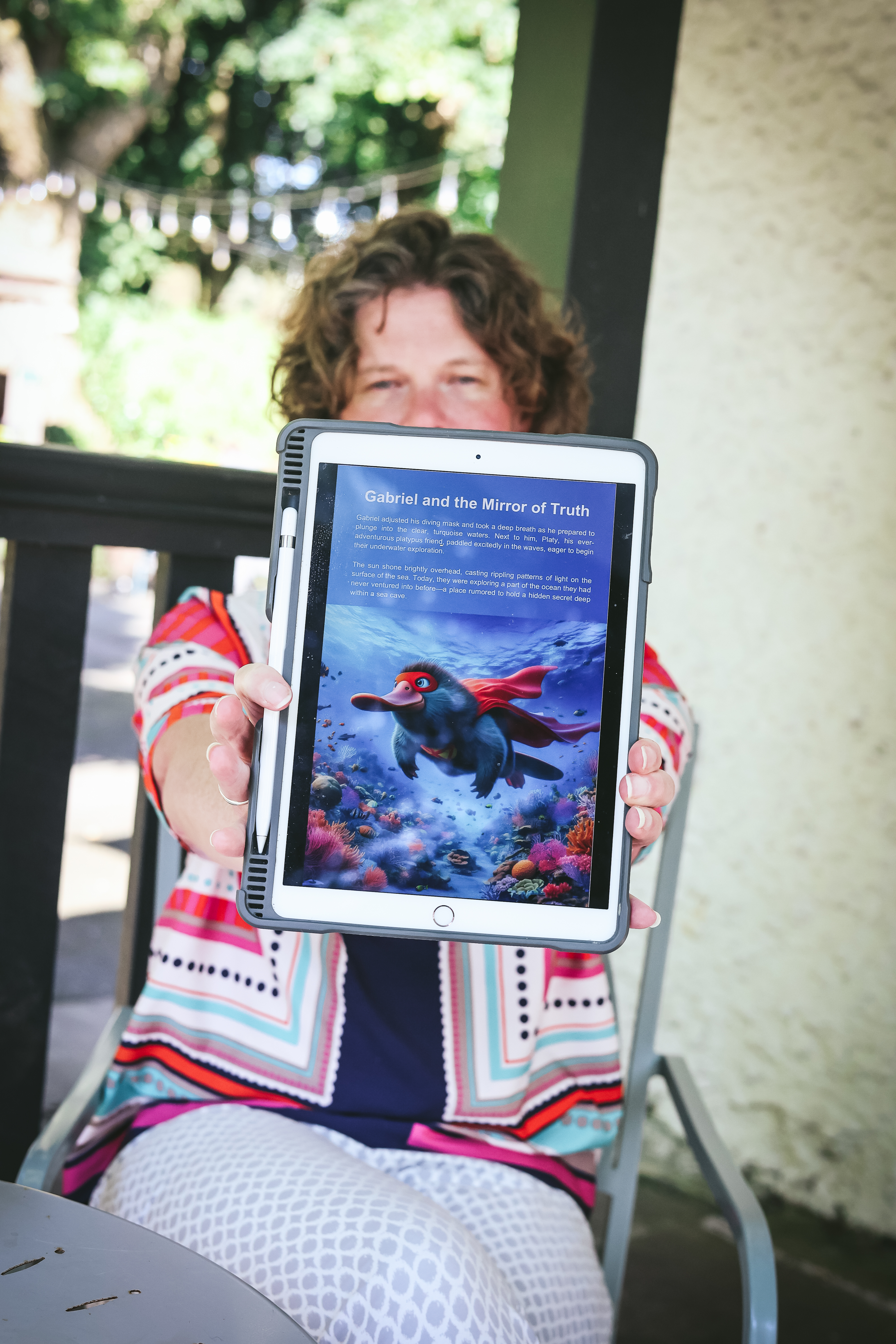
I wrote down every word as proof that I still existed as his mother.
He spoke every word as proof that he still existed as my son.
“We built Coral Cove in the dark. That is why it shines.”
What Changed When Gabriel Was Heard
Something unexpected began to happen across those twenty-four months.
Gabriel became more confident.
Not because I instructed him to be. Not because the circumstances around us became easier. But because every Friday, someone listened to what he had to say and treated his ideas as something worth preserving.
As his confidence grew, so did his stories
Book One: A World Appeared
Gabriel began with a collection of short adventures, new characters, unexpected challenges and the first glimpses of life inside Coral Cove.
Book Two: The Story Grew
The separate adventures began connecting. Gabriel was no longer creating individual stories; he was holding an entire narrative together.
Book Three: He Became the Editor
By the third book, Gabriel was reviewing, shaping and editing his own work. He was no longer only discovering his voice. He had begun to trust it.
Those Friday evenings became three published books and an Amazon bestselling series, reaching readers in the United Kingdom, the United States and Canada.
But the books were only the visible result.
The real transformation was happening inside the boy who created them.
Once Gabriel was given the freedom to express himself, he became more confident about what might be possible.
WHAT I DISCOVERED NEXT
When teachers began seeing what Gabriel had created, they asked me the same question:
“How did you do this?”
So I took the question that began our Friday evenings into schools:
“Would you like to be the hero of your own story?”
The response reached far beyond anything I had
imagined.
When teachers began seeing what Gabriel had created, they asked me the same question:
“How did you do this?”
So I took the question that began our Friday evenings into schools:
“Would you like to be the hero of your own story?”
The response reached far beyond anything I had
imagined.
465 CHILDREN
9 UK SCHOOLS
100% ENGAGEMENT
ZERO BEHAVIOURAL INCIDENTS
I wanted to understand what children were experiencing when they were trusted to lead their own stories.
Through a Classic Grounded Theory study involving 318 children, I asked one question:
“What was it like to be the author of your own story?”
Again and again, across different ages, backgrounds and levels of confidence, seven themes emerged.
I wanted to understand what children were experiencing when they were trusted to lead their own stories.
Through a Classic Grounded Theory study involving 318 children, I asked one question:
“What was it like to be the author of your own story?”
Again and again, across different ages, backgrounds and levels of confidence, seven themes emerged.
When teachers began seeing what Gabriel had created, they asked me the same question:
“How did you do this?”
So I took the question that began our Friday evenings into schools:
“Would you like to be the hero of your own story?”
The response reached far beyond anything I had
imagined.
465 CHILDREN
9 UK SCHOOLS
100% ENGAGEMENT
ZERO BEHAVIOURAL INCIDENTS
I wanted to understand what children were experiencing when they were trusted to lead their own stories.
Through a Classic Grounded Theory study involving 318 children, I asked one question:
“What was it like to be the author of your own story?”
Again and again, across different ages, backgrounds and levels of confidence, seven themes emerged.
The Seven Self-Leadership Transformations
Fun
“So much more fun than any English we’ve done.”
Freedom
“This time, you’re more free.”
Imagination
“I was in a different world.”
Challenge
“Hard—but worth it.”
Pride
“I couldn’t believe I wrote such a long story.”
Discovery
“I didn’t know I had so many stories inside me.”
Self-Belief
“I believed in myself.”
These were more than writing outcomes.
They were signs of self-leadership: children making decisions, meeting challenges, expressing their ideas and discovering that they could trust their own voices.
The same qualities described across decades of developmental psychology had appeared naturally in Gabriel’s world before I had opened a single research paper.
StoryQuest did not begin with a theory. It began with a child being heard.

WHY THIS MOMENT
In an AI world, success belongs to children who think for themselves, communicate across difference, and handle complexity with confidence, owning their own sense of identity.
Every piece of content they consume is quietly telling them what is beautiful, what matters, who is worth being.
A child who has authored their own story is immune to this in a way a child who has only consumed others' stories is not. They know the difference between a story handed to them and a story that came from inside them.
Self-leadership is not resilience. Self-leadership is leading yourself forward. Knowing what you believe before the world tells you what to think.
StoryQuest does not teach children to resist algorithms. It does something simpler and more powerful: it asks them who they believe they are.
WHERE I AM NOW
I am still in this. Not looking back at something I built and resolved. Working on it now, from inside the constraint that gave birth to it.
Not long ago, I walked went a shop to buy a gift. Gabriel was there . By chance. On the same street. Same moment.
I hugged him and hugged him and hugged him and hugged him.
In some ways it felt like two years hadn't happened, the relief was enormous. I felt him hug me back. I felt his certainty in me, as much as I could give him certainty through my hug.
The work continues because it has to.
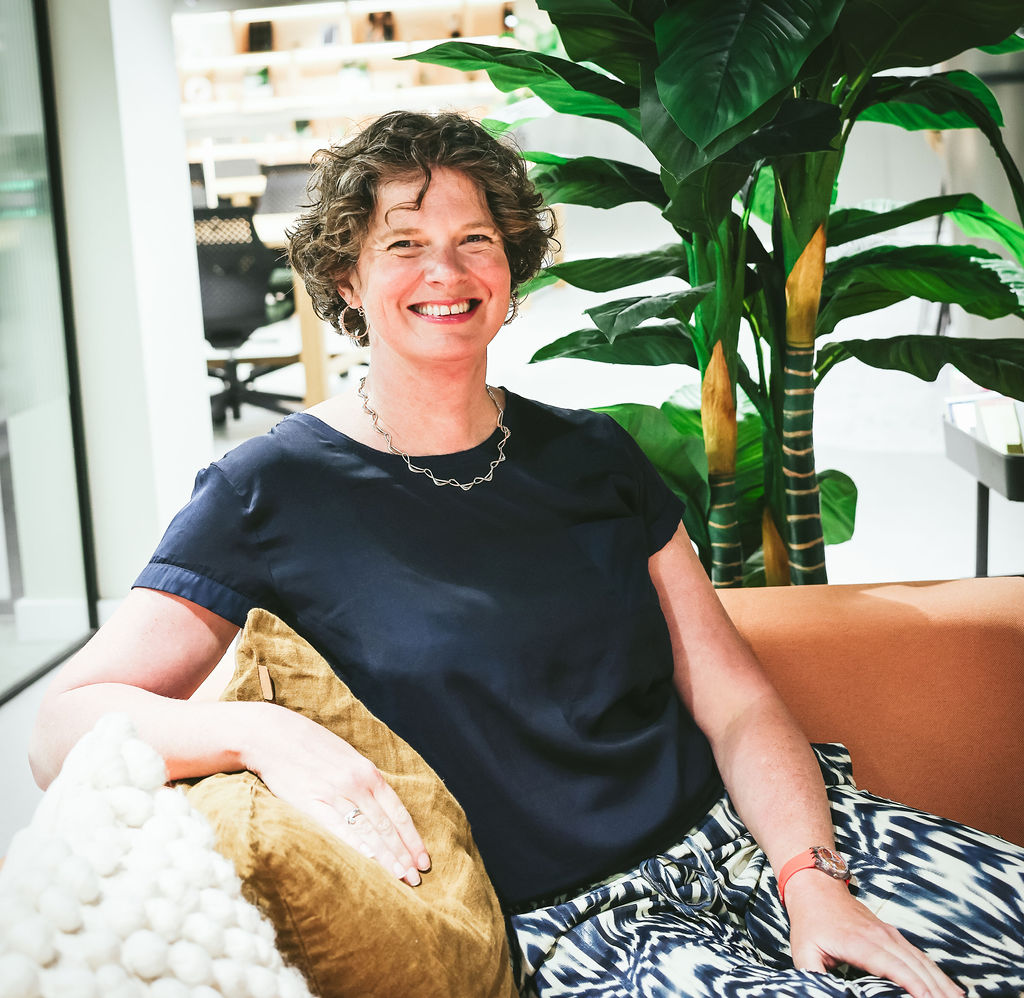
I am the creator of the StoryQuest Private Members Club. I am the woman who believes the most important thing a parent can do is hear their child's story before the world teaches the child to edit it.
The work I am proudest of is not a bestseller. It is the boy showed up every Friday nights and did not once ask if it was good enough.
What do I most want Gabriel to know,? That he is dearly loved.

CREDENTIALS
Former award-winning physiotherapist · twenty years clinical experience
Co-author · The Adventures of Gabriel · Amazon Bestseller US, UK, Canada
Founder · StoryQuest Global
British Psychological Society presenter
Accepted to speak · European Conference on Education · Barcelona Conference on Education
Public Accounts Committee 2025
UK Parliament · evidence submission
BBC News
Times Radio
PhysioZine India front cover
PhysioTimes Women in Leadership Award
Named as a Physiotherapy Icon · PhysioTimes 100th Edition · PHYSIOTHERAPY ICONS initiative
Business Person of the Year
Most Loved Clinic Award UK
UNICEF · methodology considered for the global Inspiring Playful Parenting campaign
465 children · 9 UK schools · 100% engagement · zero behavioural incidents
CGT evaluation · 318 children · seven self-leadership markers identified
Published · Journal of Novel Physiotherapy and Rehabilitation · 2024
IN THEIR OWN WORDS
What People Say About Kate and StoryQuest
From captivated audiences to inspired classrooms, hear how Kate’s storytelling encourages imagination, confidence and meaningful connection.
“Practical Steps You Can Use Straight Away”
“I found it fascinating how Kate took a familiar fairy tale and drew out practical steps you could implement straight away.”
— Rashmeet

“Powerful, Humorous and Touching”
“Kate wove a well-known story into a powerful message about expectations, mindsets and how we approach things.”
— PSA Attendee
Absolutely Magical”
“Kate’s use of imagery and metaphors was brilliant. The whole presentation was absolutely captivating.”
— Diana
“A Voice Made for Storytelling”
“Kate has a wonderful warmth and a beautiful voice made for storytelling. She really knows how to engage an audience.”
They Didn’t Want to Leave”
“Even the children who do not usually enjoy writing wanted to stay. They wanted to keep creating and asked to do it again.”
NOT SURE WHERE TO BEGIN?
Have a Conversation With Kate.
Every family’s story is different.
If something on this page feels familiar, but you are unsure whether the book, the Members Club or the StoryQuest approach is right for your child, you do not have to work it out alone.
Book a free, relaxed conversation with Kate. There is no pressure and nothing to prepare just space to share what you have noticed and explore the right next step together.
STORYQUEST GLOBAL
StoryQuest gives children the freedom to imagine, speak and be heard without being corrected, guided or rushed. It begins with a story. But what families create together is something much bigger: connection.
Quick links
Kate & Gabriel’s Story
The Adventures of Gabriel
Private Members Club
Media & Evidence
Archive
Contact
visit our store


© Copyright 2026. StoryQuest Club. All rights reserved.
Privacy Policy