
THANK YOU, YOUR ADVENTURES OF GABRIEL BOOKS ARE ORDERED.
Your confirmation is on its way to your inbox, and we'll let you know when your books are posted.
Your confirmation is on its way to your inbox, and we'll let you know when your books are posted.
Before you go, one question.
When your child finishes the last page, what happens next?
Gabriel didn't stop at reading. After finishing Treasure Island, he wrote his own story. That story became the book you've just ordered.
Today, and only on this page, you can add the workshop that shows you how to do the same with your child, for $68 instead of $97, with six bonuses included.
Your Child Doesn't Hate Writing...... They Hate Relentless Critisim
"I felt like a famous author"
Discover How Your Child Can Feel Like A Famous Author, By Removing All The Rules.
Ever wonder why some children love to write, and others freeze?
It’s no secret that lots of boys and girls fear the blank page... and shut down when asked to write a story.
Well, contrary to what you might think...
It's not that they aren’t creative.
It’s not that they hate writing.
And it's not about how many books they've read.
It's about whether they feel everything they do is going to be wrong.
When children get the chance to express themselves on their terms, everything changes.
They don’t shut down when their teacher asks them to write a story.
You don’t get school reports saying they struggle with creative writing.
When they’ve got the freedom to express their ideas in their head, they stop worrying about being corrected.
Then they start writing things like…
“Maximus, who was ginormous, stood looming over the horizon.”
Completely unprompted.
That’s what happens with the StoryQuest method.
When your child can do that, your worries about their report card will fade.
All because they have the confidence to write the incredible stories inside them.
Imagine if instead of hearing how your little boy or girl struggles to put pen to paper, you heard how engaged they were.
How their confidence was growing and they’d found a way to put their voice to paper.
Or when you asked about what they did at school today, they said…
"We got to write our own stories today & I loved it."
If your child is, like many, a reluctant writer, that might sound unrealistic.
Especially if the last time you tried this to help them with their writing, it left you feeling useless.
Or when you asked, "What should we write about?" you got an “I don’t know”.
Or no matter how many times you try, or articles you read, you still don't know what to actually say at the kitchen table.
The StoryQuest Method was tested in 9 UK schools with 465 children.
None of them sat there staring at the page, struggling to write anything.
Because none of them was asked to start from nothing.
The StoryQuest method gives them a scaffold to climb up…
Not a cage they feel trapped inside.
That’s the biggest difference between your child struggling to put their thoughts to paper…
And them telling you…
"I believed in myself so I could create things that I didn't even know I could do."
All because they’d been given the chance to tell their story without the fear of being corrected.
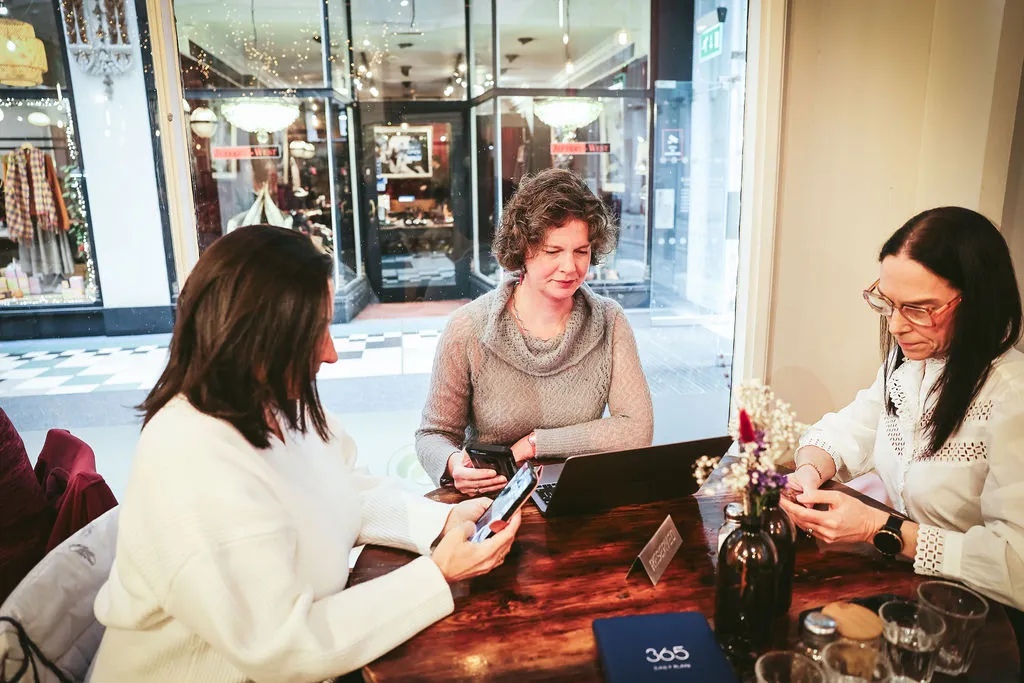
Why listen to me?
My name's Kate Markland, and I've spent twenty years learning how to listen without correcting.
First as a physiotherapist, then as a mother.
I spent my career getting reluctant patients to open up about their problems.
Not by asking 100s of questions but by asking 1…
Then giving them the time and space to open up.
I closed my clinic in 2020 and started helping clinic owners listen to their clients needs and their own priorities so that their business could be designed to meet everyones needs.
And found myself using exactly the same approach to get clients to tell me their story.
Then in December 2023, my son was removed from my care.
My access to him was restricted to 1 hour a week on FaceTime.
First, we read stories together; then, one night after finishing Treasure Island, I asked him…
“Would you like to make up a story where you’re the hero?”
Straight away he said yes.
Again, I found myself using the very same approach I used with my patients.
Asking a question, then giving him space to tell me his answer.
Never correcting.
Simply taking note of what he told me.
8 weeks later, we’d created The Adventures of Gabriel.
After speaking to a friend who’s a former head teacher and school inspector I took everything I’d done over the 8 weeks and created The StoryQuest Method.
I then tested this in 9 schools with 465 pupils…
We Received Feedback From Teachers Like This
‘Every child felt included, supported, and empowered to express their ideas freely. It was a motivating experience where every voice was heard and every idea celebrated.’
Ben Linsel Year 6 Teacher & KS2 Lead, Foxhill Primary School
‘We sometimes forget about writing for pleasure and what that can do for our kids…so it was a really lovely experience to see them really joyful, talking about their stories - they loved it.’
Tom Hirst, Head of English Dixons Manningham Primary School
'Pupils were engaged from the start, particularly knowing that anything is possible in their writing, and that they could use their own voices and imagination.’
Claire Light: Quality of Education Leader, Beckfoot Heaton Primary School, Bradford
Build Confidence
Help children aged 5–11 discover their voice and believe in their own ideas.
Create Together
Create meaningful moments of connection through shared storytelling experiences.
Encourage Creativity
Give children the freedom to explore imagination without pressure or limits.
Turn Ideas Into Stories
Transform their thoughts and dreams into stories they can proudly share.
And The Children Themselves Had This To Say…
"It felt like you could do anything and anywhere. You could even have a pet marshmallow!"
"Today was really fun, because my mind was in a world where anything is possible, and it made me curious about what to write."
"So fun. I want to be an author when I grow up. I wish I could do this every day."
IN THEIR OWN WORDS
What People Say About Kate and Create Your Own Story.
From captivated audiences to inspired classrooms, hear how Kate’s storytelling encourages imagination, confidence and meaningful connection.
They Didn’t Want to Leave”
“Even the children who do not usually enjoy writing wanted to stay. They wanted to keep creating and asked to do it again.”

You don't need to be a teacher or be creative to do this with your child...
You can help your child tell THEIR story in one sitting…
Just like the children in the schools.
The trick is that you, YOU, ask the question.
Then write down whatever they say, correcting nothing.
That's it.
That's the whole method behind the StoryQuest Method
In the Create Your Own Story Workshop, I walk you through it myself, on screen.
This is the exact same session that was delivered in nine UK primary schools.
You watch me do it once, then do it yourself.
The Create Your Own Story Workshop is the only workshop that gives you the exact method used in the 9 schools.
You can sit down with your child and build a story without hijacking it…
Every single time.
Evaluated Using Glaser's Classic Grounded Theory
The most rigorous qualitative methodology in social science research
100% of the children were engaged, and…
"Everything is boring" became…
"Can we do another story?"
There were zero behaviour incidents across all nine schools.
The research went to the British Psychological Society. UK Parliament accepted it as part of evidence submitted. UNICEF is reviewing it for their Inspiring Playful Parenting work.
That's what happens when nobody corrects the sentence on the way out.
What You Get. Three Things, In Detail
1. The online workshop
Discover what I learned in 20 years of physiotherapy and nine school pilots have confirmed…
Your role in your child's story is not to improve it...it’s to receive it.
That is the whole skill. And it is a skill you can learn in one session with me on screen beside you.
You discover -
The opening question, and why it works (Hint: it isn't "what do you want to write about"; that question is where most Friday evenings die)
The scaffold itself, not a list of instructions, but a sequence of spaces to fill with whatever your child tells you
How to ask a question and give them the space to answer without interrupting the one skill the whole workshop teaches
What to say when your child says "I don't know" and when the ideas stop, and when they get wild and strange
Watch the workshop before your first storytelling session and again whenever you need inspiration. You’ve got lifetime access.
2. The StoryQuest digital worksheet
Where you note down the words they say without correction.
The worksheet isn’t a test.
There are no right or wrong answers.
Just a tool to give them a helping hand.
They might not be able to come up with a story, but they can always come up with a monster to defeat or an adventure to go on.
Section 1: the hero and the companion. Not characters someone else gives them. Characters they create from their own imagination when asked the right question.
Section 2: the world and the story type. Six story types drawn from the oldest story structures in human literature: Overcoming a Monster, Rags to Riches, A Quest, Voyage and Return, Comedy, Rebirth. One choice gives a shapeless story a spine.
Section 3: the problem, the plan, the push, and success. Four questions for them to answer without limitation on what is “right” or “wrong”.
Section 4: the full story page where it all comes together and the story belongs to them.
The worksheet isn’t a test.
There are no right answers. The six story types are there to help with ideas.
A child who cannot think of a story can almost always think of a monster to overcome or a quest to go on.
3. The Digital Workbook "How to Create Your Own Story"
A 45-plus-activity guide for every Friday evening for the next year, across five sections:
The workbook is based on the same research as the schools programme.
The 45 ach of it at allctivities are not theoretical.
They’re what I did with Gabriel and what the teachers used across nine schools and 465 children.
Connect: the 10 activities that build the trust and safety storytelling needs before it can happen
Communicate: the 10 activities to help your child when they don't know where to start. Including the Yes-and technique and what to do when they say "I don't know" (make the ask smaller, not bigger)
Create: the 9 activities that help you become the scribe who turns their spoken words into a written story…without becoming the author
Collaborate: the 16 activities that help you notice word choices without evaluative praise, and develop the hardest, and the most important skill of all…how to resist fixing.
Celebrate: the 8 activities that help you honour what they made without judging the quality of the work
Plus a Common Challenges section and a What To Say quick reference.
Complete with the exact words to use when they're stuck, when they share, when they finish
Who This Is For
This workshop is for:
Parents of children aged 5 to 11 who want a structured, guided starting point for the StoryQuest process.
Families who have read The Adventures of Gabriel and want to build their own world alongside it.
Parents who have tried creative activities and found them hard to sustain when the child gets stuck.
Anyone who wants a repeatable Friday evening ritual they can return to week after week.
Parents who feel they are not creative enough, not trained enough, or not sure enough, and want someone to walk them through it.
✗ If you are a teacher looking for a classroom resource, our schools programme is the right fit. Please get in touch to discuss.
✗ If you are already inside the Coral Cove Club, you may already have access to the workshop. Check your membership.
What Else That Money Buys
Before you decide, look at what the same money buys elsewhere, and what you're left with in a year.
Storybird: $9.99 a month or roughly $120 a year.
It’s basically everything they get at school. Your child writes on their own, on another screen, without any structure to help the child who freezes when asked what to write about.
Private Tutoring: $300 a month or roughly $2000 a year.
Fantastic 1:1 support without a doubt, but using the same model that doesn’t work for your child in the classroom… and you don’t get to build a connection with your child.
Good Inside (Dr. Becky Kennedy): $23–$28 a month or roughly $279 a year.
Excellent on the theory of connection but doesn’t give you a single activity to actually do on a Friday evening.
Add "How to Create Your Own Story" Today And You Also Get Six Bonuses
Bonus 1: 30 days of the PlatyPress, free
My monthly printed letter for parents, posted to your door, about creating the world you want for your family, with a section just for your child. Your first month is on us. [After 30 days it continues at $97 a month. Cancel any time before then and you won't be charged.]
Bonus 2: SketchQuest
A drawing and guessing game for families, friends and classrooms.
Bonus 3: Storytelling Flashcards
Picture prompts for characters, settings and adventures.
Bonus 4: AlphabetQuest
Use the alphabet to create imaginative stories together.
Bonus 5: Character Colouring Sheet
Design a character inspired by The Adventures of Gabriel.
Bonus 6: Gabriel Poster
A printable poster celebrating The Adventures of Gabriel.
Here's everything you get today for one payment of $68:
The Create Your Own Story Workshop: Kate, on video, walking you through the full method
The StoryQuest Worksheet: hero, companion, story type, problem, plan, push, success, title
How to Create Your Own Story workbook: 45-plus activities, a Friday evening for the next year
30 days of the PlatyPress, free
SketchQuest, Storytelling Flashcards, AlphabetQuest, Character Colouring Sheet and the Gabriel Poster
What would it be worth to never sit across from a blank page and freeze again?
You're not paying $97. You're paying $68. Once.
Then they start writing things like…
The Create Your Own Story Workshop: $68.
No Subscription.
Immediate video access, a worksheet, and a 45-activity workbook built to last the year… not the month.
Here's what you get for one payment. $68.
The Create Your Own Story workshop - instant access. Kate, on video, walking you through the full method.
The StoryQuest worksheet, posted to your door. Four sections: hero, companion, story type, problem, plan, push, success, complete story
How to Create Your Own Story book - 45-plus activities. A Friday evening for the next year.
What would it be worth to never sit across from a blank page and freeze again?
The Guarantee
Watch the workshop and try the first session.
If it doesn't work, you get every penny back.
That means even if it's day 29, and the only thing that's changed is your child asking to do it again…that still counts.
Full refund, no questions, within 30 days.
We can make that offer because 465 children have already shown us what happens when you follow the process.
We're not asking you to take a leap of faith. We're asking you to try it once.

Questions Parents Ask
How long is the workshop?
The workshop runs about 60 to 90 minutes.
You do not need to watch it in one sitting.
You can watch the first section, prepare your materials, and continue later.
What age is the worksheet and workbook for?
The worksheet works best for children aged 6 to 11.
The workbook contains activities for ages 4 to 11, with each activity labelled by age range.
Younger children will use the Connect and Communicate chapters most.
Older children can work through the full worksheet independently with a parent scribing.
Do we need to have read The Adventures of Gabriel first?
No. The workshop and workbook stand entirely alone.
If your family has read the books, the worksheet will feel like a natural extension of the world Gabriel built.
If you haven't, the worksheet introduces you to the six story types and the StoryQuest process in a way that works without prior knowledge.
Right now you have two options
Option one
You close this page and continue to worry about your child struggling to put pen to paper.
Option two:
You get the workshop, watch it once, and find out what your child says when nobody corrects them..
465 children have already shown you which one works.
The story is in your child. The workshop shows you how to let it out.
You don't need to be creative. You don't need to be trained. You just need to know what to do with the pen when the story arrives.
Immediate access to the online workshop.
Physical worksheet and workbook posted to your door. 30-day money-back guarantee.
P.S. The most common thing parents say after the first session is: "I didn't know they had that in them."
But they always had the story in them; the workshop just helps you to open the door for them to tell it to the world.
Sit down together on Friday evening.
Write down everything they say.
Correct nothing.
Kate x
The Adventures of Gabriel
The Coral Cove Club gives children the freedom to imagine, speak and be heard without being corrected, guided or rushed. It begins with a story. But what families create together is something much bigger: connection.

coNTACT dETAILS
+44 7360 270776


© Copyright 2026. The Adventures of Gabriel. All rights reserved.
Privacy Policy